Category Archives: Mushroom dyeing

Results of dyeing fibre with mushrooms I’ve found in the surrounding rainforest

From a cold dyepot

Dyed in a cold dyepot

Back in October, when more and more dye mushrooms were coming home with me and the dyepots never cooled down, I’d finished with a good batch of Dyer’s Polypore (Phaeolus schweinitzii) but didn’t have time to do the exhausts, so I stuck the pot outside on my mudroom steps, with all the chunks of mushrooms going back into the dyebath.

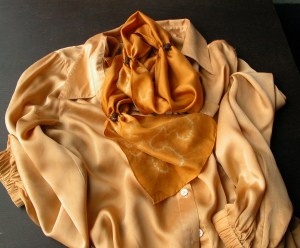
At the same time, I found myself wondering what to do with a silk blouse that had a stain on the front. Aha! I thought. Let’s see if it can pick up any colour, and if the colour’s uneven and blotchy, so much the better.

It was a good six weeks before I got back to that dyepot, and even though parts of the blouse had been sitting right on the mushrooms all that time, the colour turned out to be quite even; too even, in fact – the stain still shows! (In the picture is a scarf from the original dyebath – I’ve embellished it with some mushroom beads.)

This is worth experimenting with next year, when I end up with more Phaeolus than my dyepots can accommodate. In the meantime, I still have to come up with some way of hiding that stain!

Mushroom-dyed handspun

Dermocybe-dyed handspun

Last year it was all about trying as many mushroom colours as I could, which meant using commercially spun yarn. But I got more pleasure this year from spinning the rovings I dyed with mushrooms, and that’s where I want to focus my efforts next year.

These yarns were made of wool dyed with the dermocybes – Cortinarius semisanguineus and their cousins. The skein on the left is a textured yarn, made by spinning thick and thin.  I spun the one on the right using wool from three exhausts of the same dermocybe dyepot. I pulled off small pieces of roving and spun the three colours one after the other. I ended up with two bobbins of this, which I then plied together. It made such a rich medley of shades, I had trouble putting it down! These skeins have both gone to good homes, and I hope to see what their owners do with them.

Phaeolus-dyed handspun

These skeins were made with fibre dyed with Phaeolus schweinitzii, or dyer’s polypore. The left skein was again made with rovings from three exhausts of the same dyepot, spun fairly thick and with a lot of texture.

The next skein is a knot yarn; I plied an evenly spun wool singles with a finely spun silk singles, which I allowed to knot upon itself throughout the plying. The silk gives it a fine sheen, and the knots give it a wonderful texture. The skein on the right was made from the brilliant gold rovings I got from the button dyer’s polypores I mentioned in an earlier post. I spun this thick and thin, to get some real texture going. These, too, were snapped up by knitters who appreciated their one-of-a-kind value.

Getting ready for Dunbar

Getting ready for Dunbar

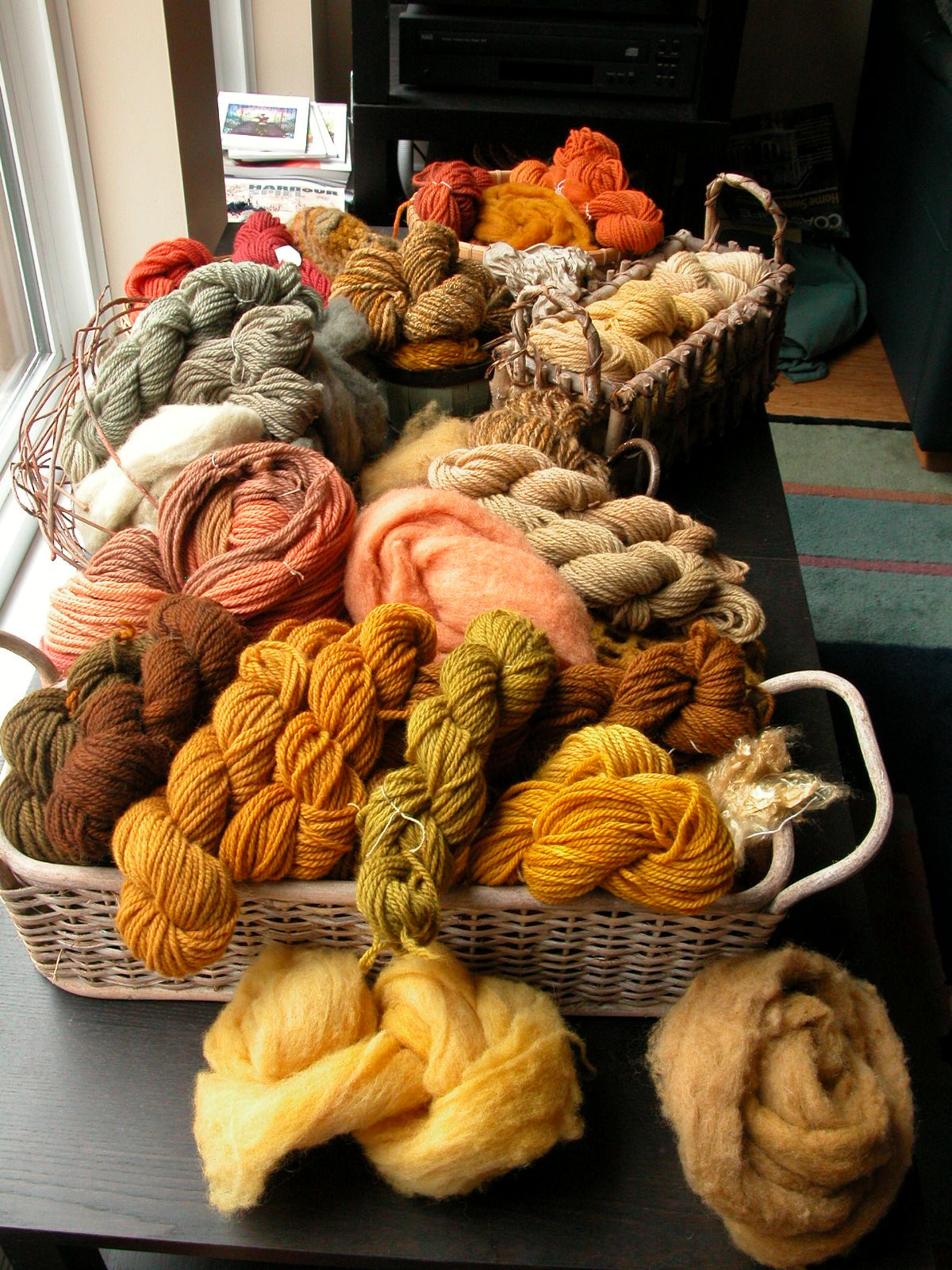
The house is filling up with all manner of mushroom-dyed yarns, rovings, fleece and silk scarves, all in preparation for the annual craft sale at the Dunbar Community Centre in Vancouver on Saturday, November 27. I still have a few dyepots to go, most notably the lobster dyepot (Hypomyces lactifluorum), which I’ve been putting off because most of the lobsters people have given me are starting to get a bit . . . shall we say . . . ripe. That doesn’t affect the colour, but it probably means I’ll be peeling off the orange layers outside.  I’ll have to take advantage of the next dry day to do so.

Our own lobster patches – those that survived the logging behind us – haven’t produced anything this year, sadly enough. I like to think the mushrooms are protesting the fact that their space is within site of the clearcut areas. I have no doubt they’ll be rested and ready to resume normal mushroom behaviour next year.

Dermocybe dyepot

Dermocybe rovings

I found a great location for Cortinarius semisanguineus this year, which is a good thing, because my usual closer-to-home patches are showing very few of those special little mushrooms, and I might have been dyeing a tiny sample instead of the great quantities of wool and yarn I’ve been putting through the dyepots.

I didn’t have time to sort the mushrooms out by the colour of their gills – red, gold, or yellow – so I put them all together until my dyepots were free. By that time they’d turned into a smelly, runny mass of pigment, but it was still pigment, and that was all that mattered.

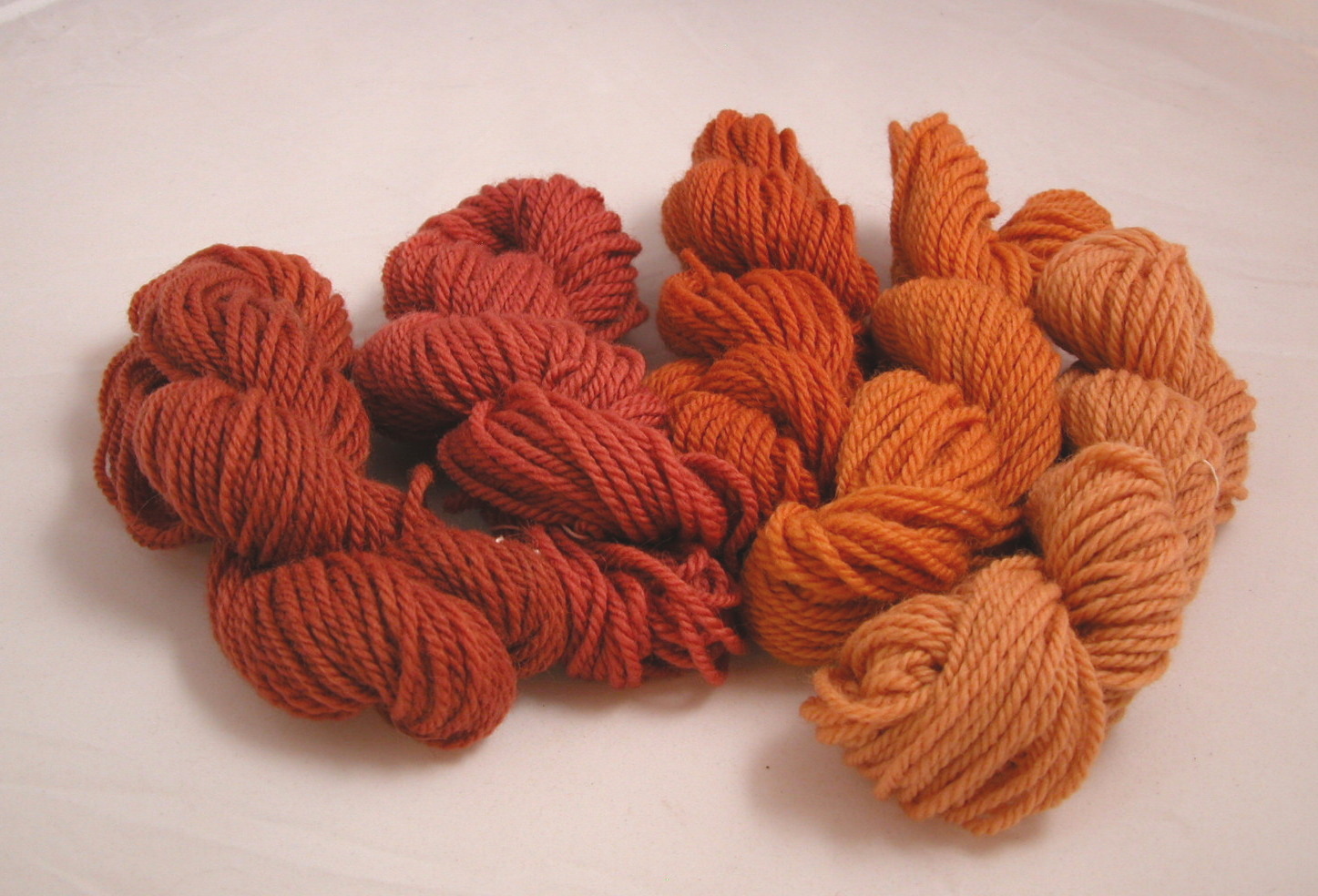
I started with a four-litre bucket of mushrooms when they were fresh, so I put the reddish goo into my dyepot, then strained out the pieces after it had simmered for an hour or so. Then for each exhaust, I put in a piece of merino roving and a 50-yd skein of merino – and look at the results!

The red pigments were obviously picked up first, leaving some brilliant oranges for the last three exhausts.

I have one more harvest of dermocybes to process, but I’m holding out until I’m sure I’ve found all I’m going to find!

Dermocybe skeins

Premordanting vs afterbath

Effects of iron and copperThese skeins show the difference between premordanting and being treated to a mordant afterbath. All were dyed with dyer’s polypore, Phaeolus schweinitzii.

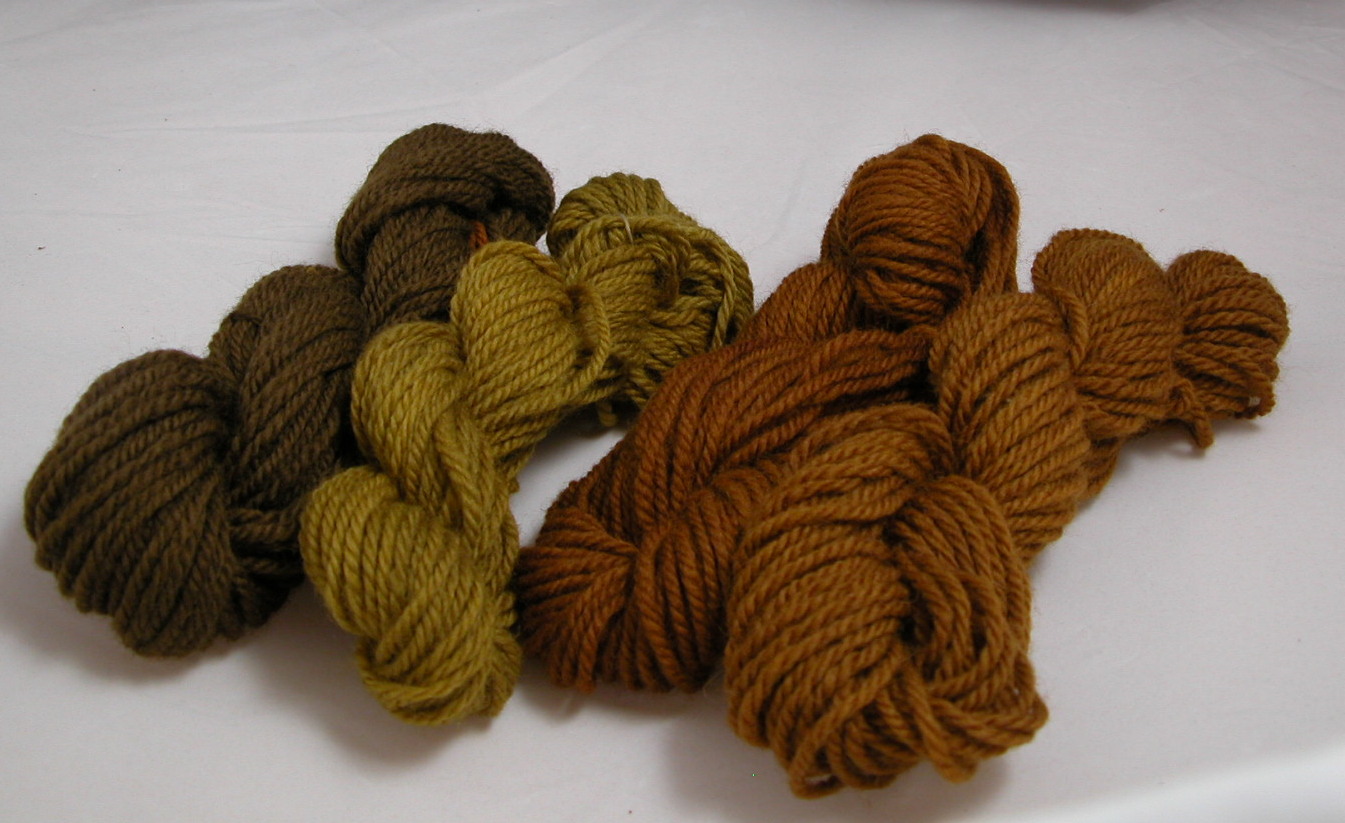
The two on the left were treated with iron; the darker one was premordanted, while the lighter one sat in an iron afterbath for about thirty minutes.

The brown skeins were treated with copper; again, the darker one on the left was mordanted before dyeing, while the lighter one was immersed in a copper afterbath.

Care must be taken not to use too strong a mordant solution, as I understand it can damage the fibres over time.

I premordanted the skeins by weighing the fibre and using about 7% of that weight when measuring out the mordant, plus an equal amount of cream of tartar. The afterbaths were made with a quarter teaspoon of mordant dissolved in three cups of boiling water. I’m keeping the solutions in labelled jars, should I want to use them as afterbaths again.


This one gave neon colour!

Young Dyer’s Polypore

It’s late in the season to be finding young Phaeolus, so imagine my delighted surprise when I found four young clusters last week, all within some 200 yards of each other, and all coming up from underground fir roots (as opposed to growing on the tree trunk itself).

Look at these colours!

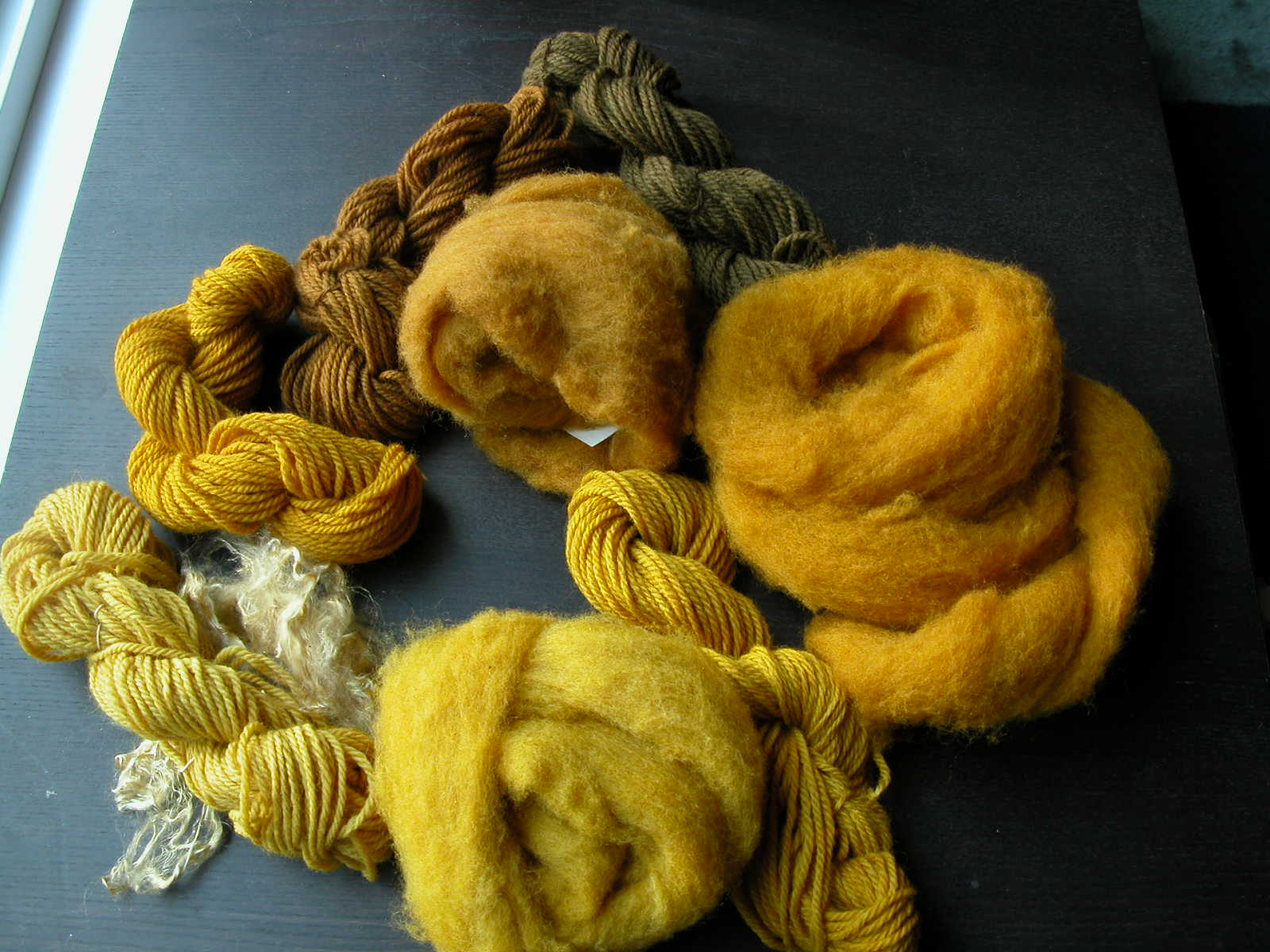
Now look at the colours (unretouched) that came from these four little clusters! These were from four exhausts, starting with the skeins/roving at top left (wool premordanted with copper and iron gave the brown and green skeins) and going around clockwise. The roving from the second dyebath (top right) was actually brighter than the first – I had this experience last year, too.

Not pictured are two skeins that I treated with copper and iron afterbaths.  I’ll post pictures of those soon, but right now I’m flying out the door for what will probably be the last organized foray of the Sunshine Coast SHROOM (Society for the Hunting, Recognition and Observation of Mushrooms).

This is funny

The blob
Phaeolus in a bag

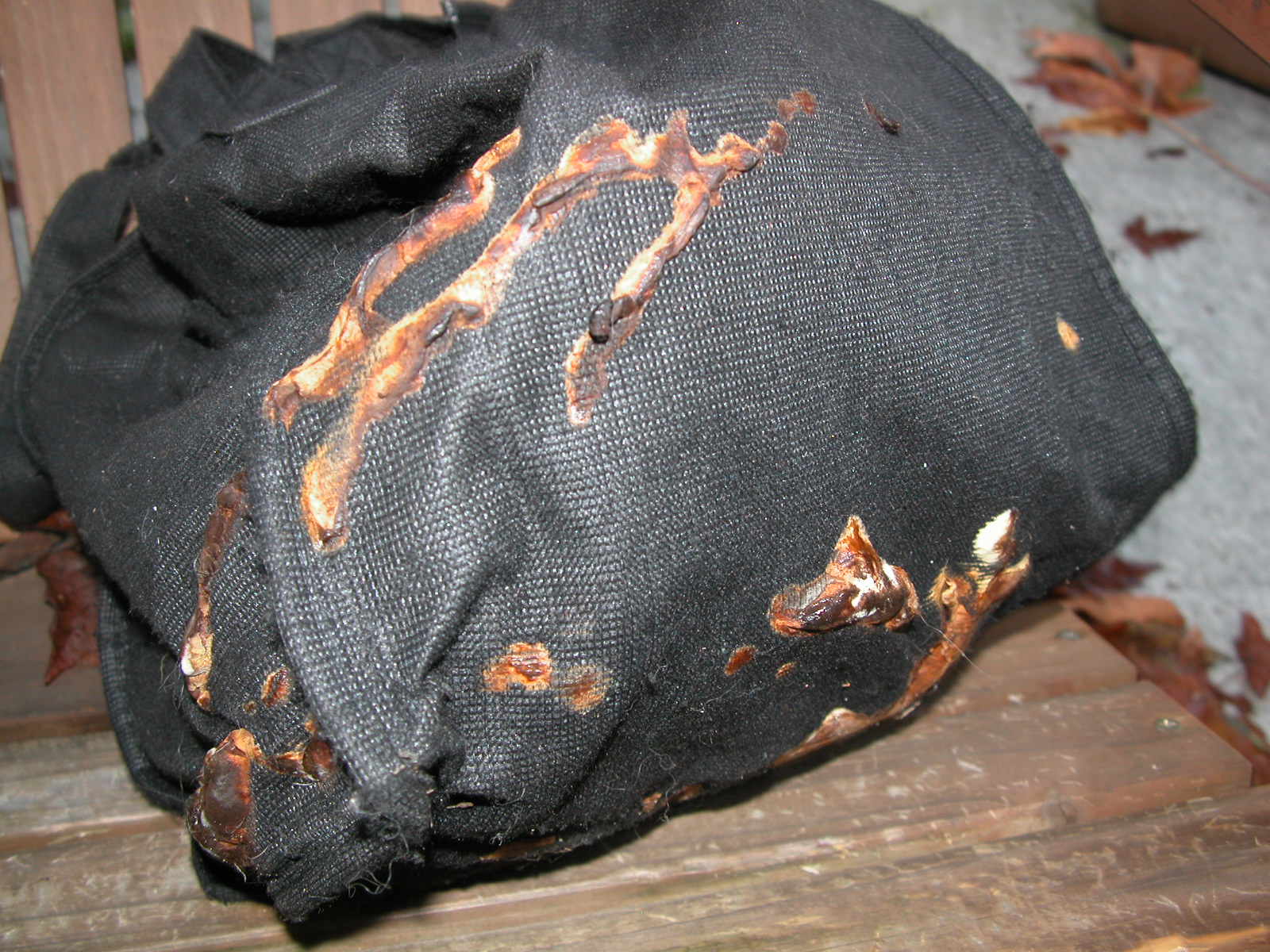
My dearest found a couple of fresh dyer’s polypore last week and brought them home in a cloth bag.

I had no time for dyepots, as we were into the final days of organizing our mushroom festival (which was a huge success, by the way), so I let the fungus sit on the front porch, still in the bag.

Here’s proof that mushrooms are set to take over the world: in less than a week, the edges had grown through the bag! Perfect early growth for some rich colour.

Dyepots are on again!

Young Phaeolus dypeot
spinning fibre

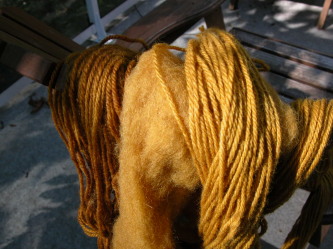
I’m starting to find young dyer’s polypore (Phaeolus schweinitzii) in the forest, so they’re giving me some very rich golds, made even richer by the afternoon light.

I made another dyepot using grey fleece, Corriedale roving and a handful of Tencel. The colour didn’t turn out to be quite so vibrant, but rich nonetheless.

Last year I dyed mostly commercial yarn because I was more interested in seeing the wide range of colours I could get. This year I plan to dye more unspun fibre so I can play with them at the spinning wheel. Now it’s out for a foray in another part of the forest, a friend, my dog, and me.

Colours from Sweden

Gathering samples

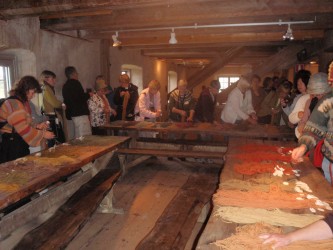
On the last day of the symposium, we all gathered on the second floor of an old stone building (note the depth of the walls where the windows are), where samples from all of the week’s dyepots were laid out on long tables. We all went around and picked up a sample from each pile, all nicely labeled.

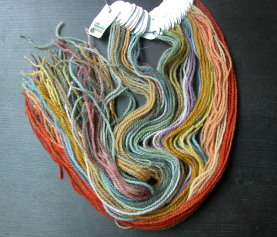
I still spend a few minutes each day fondling the samples I brought home with me. All the mushroom colours go with each other, and they’re all so lovely.

I’m especially fond of the blue from Sarcodon squamosus (I have to find out if it grows in the interior of BC, because it doesn’t here on the Coast) and the amazing purple from Hapalopilus nidulans. A find of either of those would send me into a rhapsodic swoon.

Samples from Sweden

Home from Sweden – a fabulous visit!

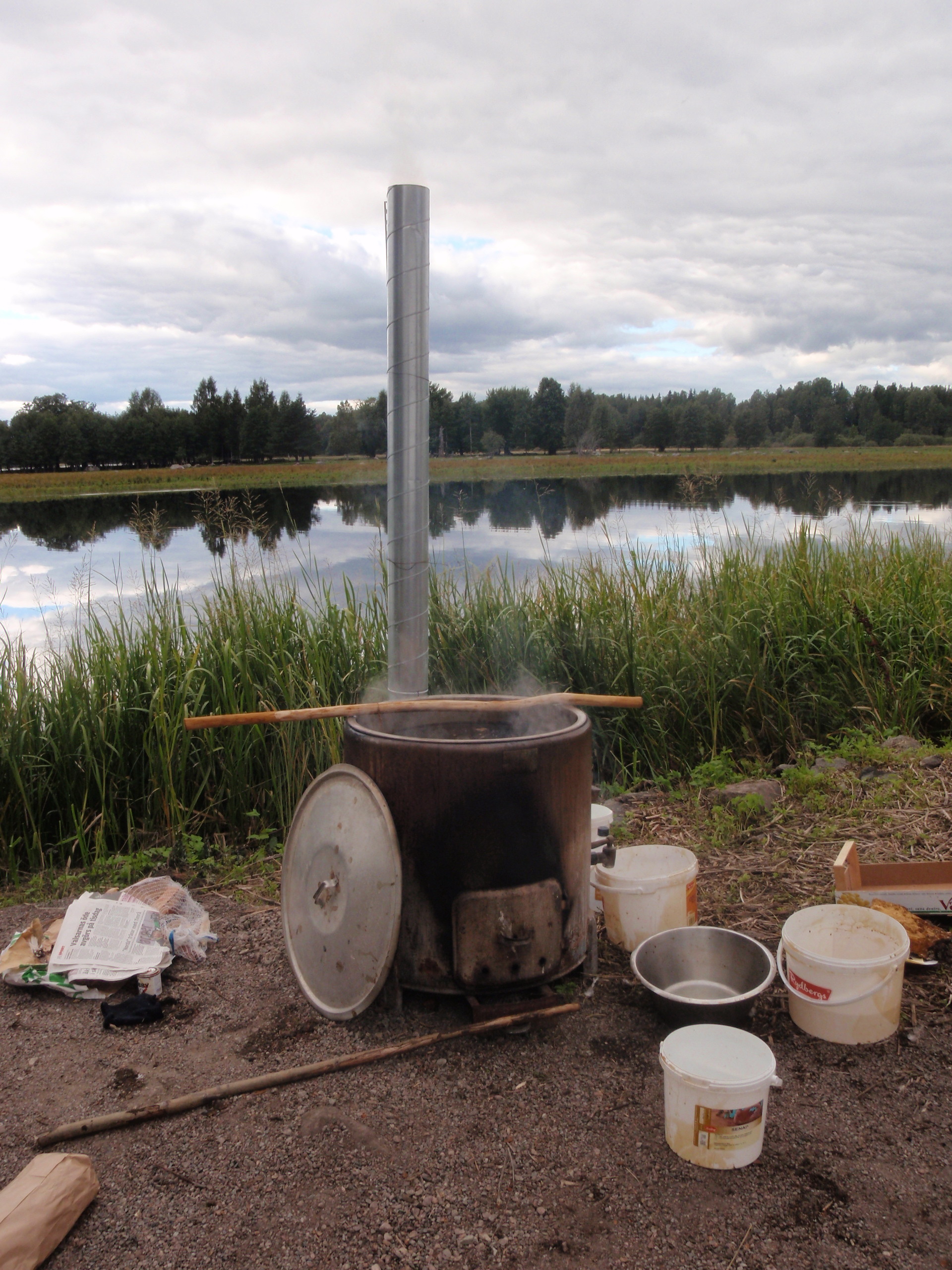
Outdoor dyepot
Mushroom colours hanging out to dry

I got home last week from the 14th International Fungi & Fibre Symposium in Gysinge, Sweden. The setting couldn’t have been better: a self-contained educational centre on the site of a 19th-century ironworks.

Two traditional wood-fired dyepots were kept going for the entire week, as well as a whole bank of dyepots on hotplates. Here’s just a sample of the mushroom colours that came out of the pots. At the close of the event, we all collected samples of all of the week’s colours, a veritable rainbow.

The Scandinavian forests must be full of all the good little dermocybes that give such rich reds and oranges, as we saw these colours in abundance, not to mention the blues from Sarcodon squamosus and the purples that come from Hapalopilus rutilans – I despair of ever finding these here on the West Coast, so I’m doubly grateful for those samples.