Tag Archives: Ramaria largentii

Fool-proof purple with Ramaria

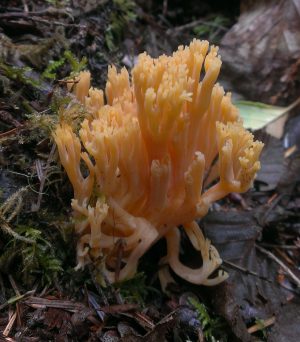
My dyeing buddy (and IFFS fellow traveller, except we missed out on the Canary Islands last year), Muriel, has developed a fool-proof method for obtaining purple from orange Ramaria, so I gave it a try with a double handful of the orange coral that I found a couple of days ago.

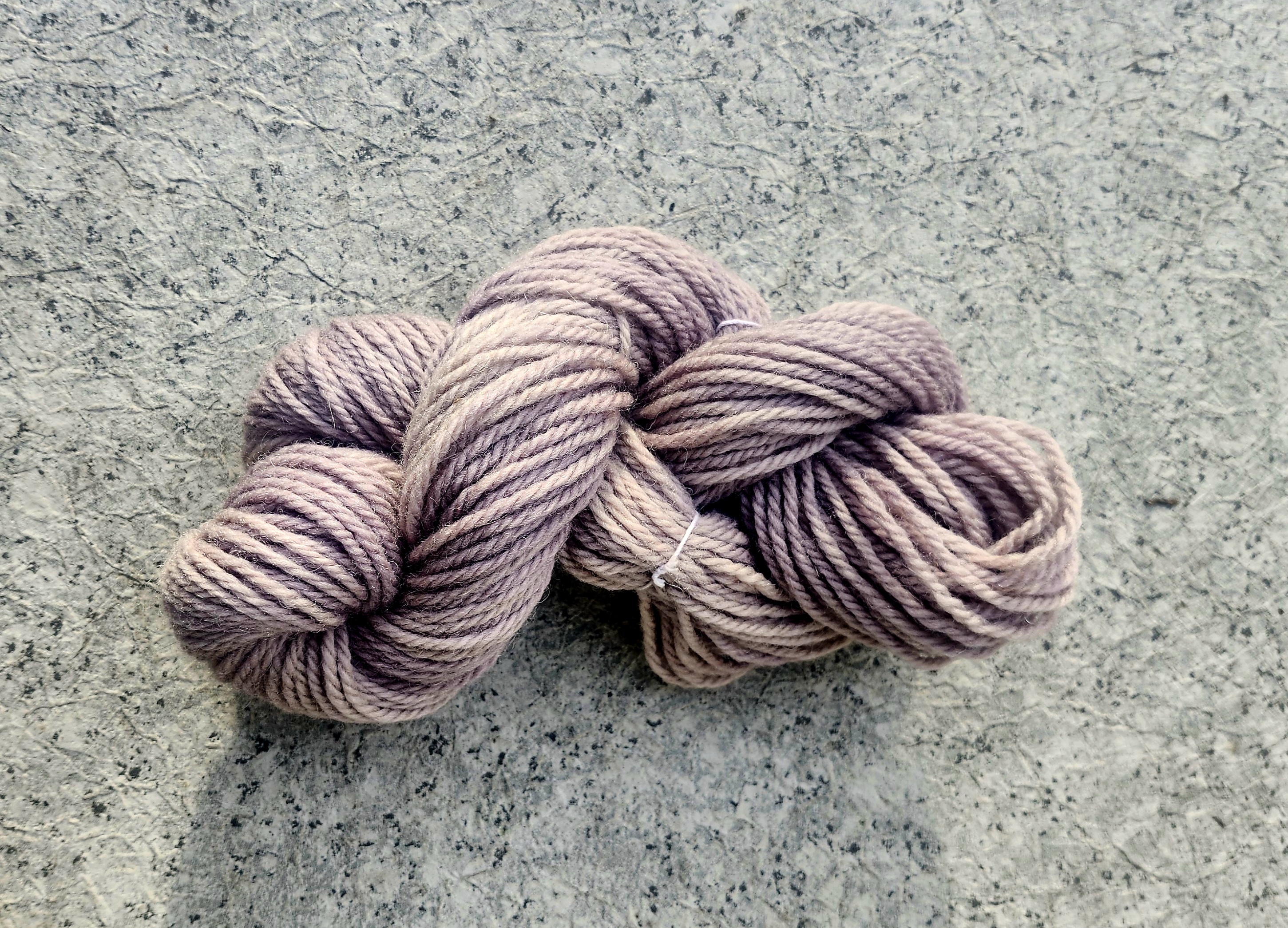
The mushroom weighed in at 150 grams, but it was still quite wet, so I used just 50 grams of wool yarn. First I put the mushroom in a large jar and just covered it with water, then covered it loosely with a piece of foil; then the iron-mordanted fibre went into another jar of plain water. Both jars went into my largest soup pot, with a cake-cooling rack underneath (I could have also used a folded tea towel to keep the jar from direct contact with the bottom of the pot). Then I added water to the pot until it reached the level of the jars’ contents.

I brought the water in the pot up to a slow simmer, then watched the temperature of the water in the jars. When that reached 90°C (about 195° F), I kept it at that temperature for an hour, then turned everything off, to let it cool overnight.

Next time I’ll use a higher coral:fibre ratio, as this was paler than I hoped for, and I’ll move the fibre around more once it goes into the dyebath. Nevertheless, I’m pleased with the result.

Incidentally, I have occasionally obtained a pale purple with white coral, but the results are less consistent than when dyeing with its orange counterpart.

That’s What I Call Purple!

Who but another mushroom dyer would get excited about what appears to be bits of slime interwoven with purple intestines? Just look at that colour! I had to grab a shot of this straight out of the dyepotthere will be time later to pick the bits out, dry the wool, and card it for spinningthe first purple of the season deserves to be documented here and now.

Ramaria is appearing in abundance this year, and as I learned from previous experience, they have to be used fresh. Given that I’ve come home with bags full of these gifts from the forest each time I go foraging, and given that my studio time is somewhat limited this month, I’ve chosen to process these dyepots in the kitchen (a practice I usually discourage, but I’m using dedicated pots and utensils and turning on the range hood fan).

I also decided to put the wool straight in with the the mushrooms, which is giving an interesting variegated effect, as the wool that’s in direct contact with them is much darker.

Being careful not to let the dyebath get too hot, I bring the temperature up slowly; the purple starts to appear at around 48°C (120°F). I bring it up to 70°C (160°F), then turn the heat off. I leave the dyepot on the burner and let it cool for a few hours or overnight, then repeat the process twice more. I don’t know if these repetitions are necessary, but I like to think the colour will have a better chance to set by doing that.

Is it any wonder purple has always been a royal colour?

Rethinking Ramaria

Ramaria largentii
Ramaria largentii

My freezer has been home to masses of frozen Ramaria collected for the Fungi and Fibre Symposium dyepots, but I wanted to be sure it would give some good colour after being frozen for nine months. My earlier experiments with the frozen version of this mushroom resulted in a decent purple, but I didn’t want to take a chance on seeing a dozen international visitors hovering over a dyepot, watching and waiting for purple. And ending up with a blah beige.

So this lovely orange coral appeared in my Back Forty at the perfect time, when plans for the event are ticking along nicely and when my hands really needed to get into some dyepots. The coral came home with me and went straight into my sample dyepot along with a few strands of iron-mordanted yarn.

The results amounted to a revelation. I recant my previous musings about frozen Ramaria and about keeping the dyepot temperature on the low side. Here’s what happened (laid out on grey cardstock—the colours are true, at least on my screen) :

Ramaria samples, fresh and frozen

First, it doesn’t appear that the purple from Ramaria is quite so finicky as the other purple-bestowing mushrooms when it comes to temperatures (specifically Tapinella atrotomentosa and Omphalotus olivascens, which need to be watched carefully and pulled at ~160° F). Clearly the dyebath shouldn’t be allowed to reach boiling, but 170° F was the optimum for the first two sets of samples.

My second discovery: freezing Ramaria works if done for a short time but not for the nine months I subjected my stash to. So I returned the Symposium orange coral to the forest floor, and now I’m hoping for an outstanding harvest this year so our registrants won’t be disappointed.

At the same time as I found the Ramaria, I also found Clavulina coralloides in various stages of infection with Helminthosphaeria clavariarum, a fungus that routinely parasitizes this little coral.

Clavulina Coralloides 3pics
Since I was planning on doing some sampling anyway, I decided to try this one too—with the darkest of the infected coral—on the off chance the deep purple of the parasite might translate into the dyepot, again with an iron-mordanted test strand.

Clavulina samples

More grey than purple, but clearly darker with more heat. Worth playing with some more? I don’t think so.